
How much BAC water for 10mg retatrutide? There is no single medically established amount of bacteriostatic water (BAC water) that should be added to a 10 mg retatrutide vial. Retatrutide remains an investigational medication and is not currently FDA-approved, so there is no FDA-approved retatrutide vial label that provides a standard reconstitution volume for home use.
The amount of diluent changes the final concentration of a solution. That means choosing a volume without knowing the intended concentration and the exact product instructions can lead to serious dosing errors.
This guide explains what the question means, how concentration works, why online reconstitution charts can be misleading, and what information should be confirmed before using any injectable product.
Table of Contents
What Is BAC Water?
BAC water, short for bacteriostatic water for injection, is sterile water containing a preservative that can inhibit the growth of microorganisms after the vial is entered multiple times.
It is different from simply using ordinary sterile water, and the appropriate diluent depends on the specific medication and its instructions. A diluent should not automatically be assumed to be compatible with every injectable drug.
How Much BAC Water for 10mg Retatrutide?
There is no universal BAC-water volume for a 10 mg retatrutide vial.
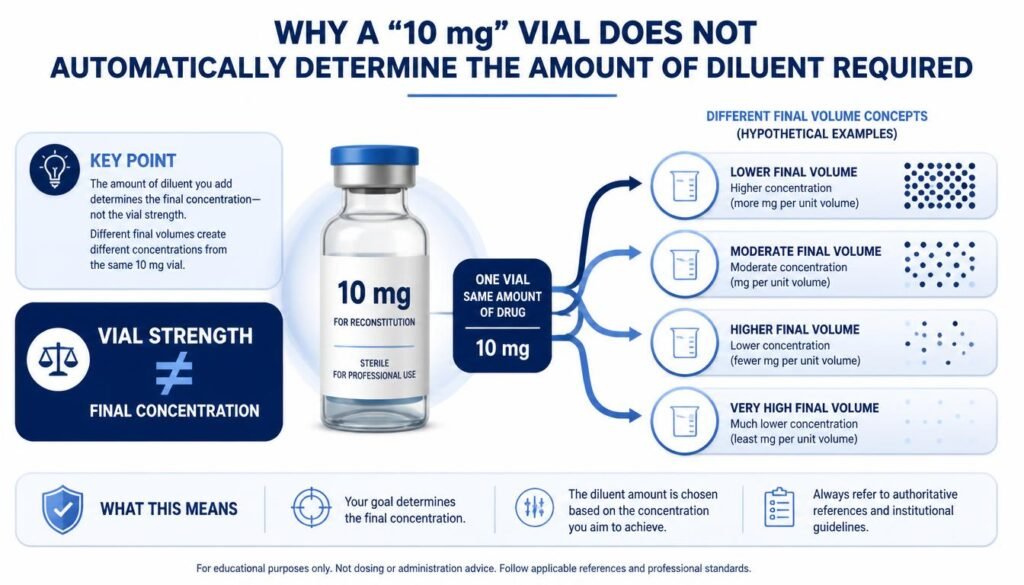
The correct amount would depend on the concentration intended for the particular preparation. For example, the same 10 mg amount could theoretically be prepared at different concentrations by using different final volumes. Changing the volume changes the amount of drug contained in each milliliter.
Because retatrutide is investigational, online recommendations such as “add X mL of BAC water to every 10 mg vial” should not be treated as an official dosing instruction.
Lilly states that retatrutide is not currently FDA-approved and is being studied in clinical trials.
Why the Vial Strength Alone Is Not Enough
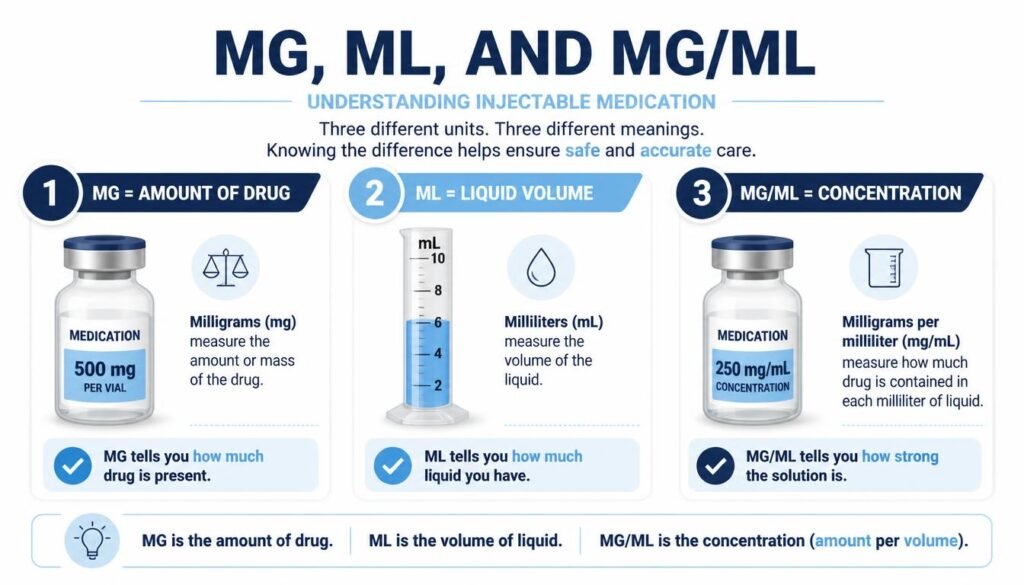
A 10 mg vial tells you the total amount of retatrutide in the vial. It does not, by itself, tell you how much liquid should be added.
Think of it this way:
- 10 mg = total amount of drug
- mL = volume of liquid
- mg/mL = concentration
Different volumes can produce different concentrations. Therefore, the vial strength alone cannot determine a safe reconstitution volume.
Why There Isn’t One Standard Reconstitution Ratio
Retatrutide is being studied in clinical trials rather than supplied as an FDA-approved commercial product with standardized patient instructions.
The FDA currently states that retatrutide cannot be used in compounding under federal law and is not an ingredient in an FDA-approved drug.
The FDA has also issued warnings concerning marketed retatrutide products, including products described as compounded or repackaged.
That creates an important distinction between:
A clinical-trial medication
The formulation, concentration, administration instructions, and handling are controlled by the study protocol.
An online or research-market vial labeled “10 mg retatrutide”
Its contents, concentration, sterility, labeling, and instructions may not have been reviewed or verified by FDA.
For that reason, an online BAC-water chart cannot establish a medically appropriate preparation.
How Retatrutide Concentration Works
The basic relationship is simple:
Concentration = amount of drug ÷ final volume
For example, if a hypothetical medicine contains 10 mg of active ingredient and the final solution volume is known, dividing 10 mg by that volume gives the resulting mg/mL concentration.
The key point is that the concentration must be known before a volume-based dose can be interpreted correctly.
This is one reason that two people can have identical 10 mg vials but receive completely different-looking instructions if their prescribed formulations have different concentrations.
Does Adding More BAC Water Make Retatrutide Safer?
No.
Adding more diluent does not make the active drug intrinsically safer. It changes the concentration of the solution.
A more dilute solution may contain fewer milligrams in each milliliter, while a more concentrated solution contains more milligrams in each milliliter. The total amount of active ingredient and the intended dose still matter.
Using an arbitrary amount of BAC water can therefore create confusion between mL, mg, and the intended dose.
Can You Use an Online 10mg Retatrutide Reconstitution Chart?
An online chart should not be used as a substitute for product-specific medical instructions.
This is especially important with products marketed outside an FDA-approved supply chain. The FDA warns that compounded drugs are not FDA-approved and are not reviewed by the agency for safety, effectiveness, or quality before marketing. Poor compounding can result in contamination or incorrect drug strength.
A chart may also assume a particular concentration that does not match the vial in front of you.
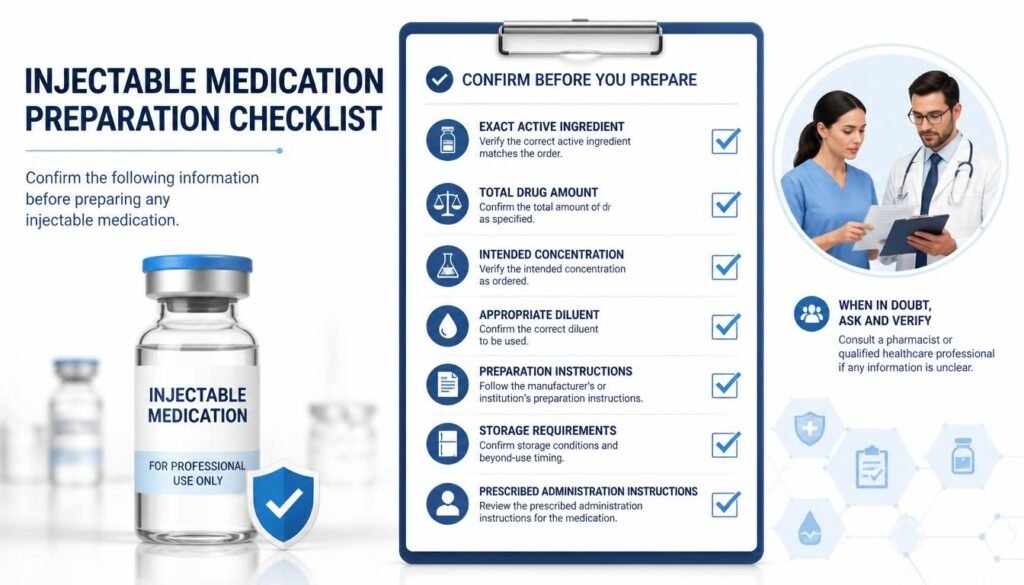
Before relying on any reconstitution information, the following should be independently confirmed:
- Exact active ingredient
- Total amount in the vial
- Intended final concentration
- Appropriate diluent
- Preparation instructions
- Storage requirements
- Prescribed dose and administration instructions
If those details are not provided by a qualified healthcare professional or an authorized clinical-trial source, guessing is not appropriate.
What Is the Difference Between 10mg and 10mg/mL?
These terms are not interchangeable.
10 mg means the vial contains a total of 10 milligrams of active ingredient.
10 mg/mL means each milliliter of the finished solution contains 10 milligrams of active ingredient.
A vial labeled only “10 mg” does not automatically mean that every milliliter contains 10 mg.
This distinction is one of the most common sources of confusion in peptide reconstitution discussions.
What Should You Do With a 10mg Retatrutide Vial?
The safest approach is to avoid choosing a BAC-water volume based only on the words “10 mg retatrutide.”
If the product was provided through a legitimate clinical trial, follow the study team’s preparation and administration instructions. Retatrutide is currently being evaluated in clinical trials, and Lilly states that it is legally available through those trials rather than as an approved consumer medicine.
If the vial came from an online seller, research supplier, or another unregulated source, a healthcare professional should be consulted before attempting to prepare or inject it. There may be no reliable way to verify the product’s identity, purity, sterility, concentration, or appropriate administration instructions.
Common Mistakes When Reconstituting Peptides
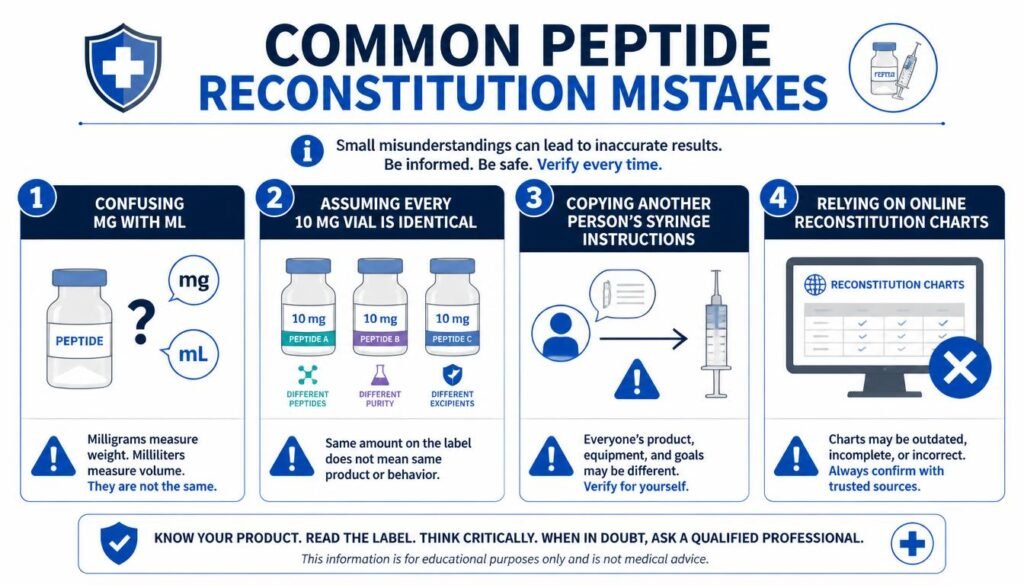
Confusing mg With mL
Milligrams measure the amount of drug. Milliliters measure liquid volume. They are different measurements.
Assuming Every 10mg Vial Is the Same
A label showing 10 mg does not establish the concentration, formulation, sterility, or appropriate diluent.
Copying Another Person’s Syringe Instructions
A syringe marking only makes sense when the concentration of the preparation is known. Copying someone else’s “units” can therefore produce the wrong dose.
Relying on Social Media Calculators
Online calculators can perform arithmetic, but they cannot verify whether the underlying drug, concentration, diluent, or preparation instructions are appropriate.
Treating “Research Use” as an Approved Medical Product
A research-market label does not make an injectable product FDA-approved or establish that it is suitable for human use. FDA has specifically warned about unapproved retatrutide products.
Is Retatrutide FDA Approved?
No. As of August 2026, retatrutide is not FDA-approved and remains an investigational medication being evaluated in clinical trials. Lilly describes it as an investigational medicine and says its availability depends on successful clinical development and regulatory approval.
This matters because there is currently no FDA-approved retatrutide prescribing label that establishes a standard consumer reconstitution procedure for a 10 mg vial.
Does BAC Water Come With Retatrutide?
There is no FDA-approved retatrutide product that comes with a standard consumer BAC-water reconstitution protocol.
The diluent and preparation method for an injectable medication should come from the authorized product instructions or clinical protocol rather than from a generic peptide chart.
FDA also emphasizes that compounded drugs are not FDA-approved and can carry quality risks when preparation or handling is inadequate.
What Information Is Needed to Calculate a Concentration?
To calculate the concentration of an injectable preparation mathematically, you need at least:
- The total amount of active ingredient.
- The final volume of the prepared solution.
The general formula is:
Concentration (mg/mL) = total drug amount (mg) ÷ final volume (mL)
For a hypothetical 10 mg preparation, the arithmetic is straightforward once the intended final volume has been established. The difficult and safety-critical part is determining which final volume and concentration are actually appropriate.
That decision should not be invented from a generic internet chart.
FAQ: How Much BAC Water for 10mg Retatrutide?
How much BAC water should I add to a 10mg retatrutide vial?
There is no universally established amount. The appropriate preparation depends on the formulation and authorized instructions, and retatrutide is currently investigational rather than FDA-approved.
Can I use 1 mL of BAC water for 10mg retatrutide?
You should not assume that 1 mL is the correct volume. A particular volume produces a particular concentration, but that does not establish that the resulting concentration is medically appropriate.
Can I use 2 mL of BAC water for a 10mg vial?
The same caution applies. Two milliliters would produce a different concentration from one milliliter, but the vial strength alone cannot tell you which concentration should be used.
What happens if I add too much BAC water?
Adding more diluent changes the final concentration. This can make dose calculations inconsistent with the intended preparation and increase the risk of administration errors.
Is BAC water the same as sterile water?
No. Bacteriostatic water and sterile water for injection are different products and should not be treated as automatically interchangeable. The appropriate diluent depends on the specific injectable formulation and instructions.
Can a retatrutide dosage calculator tell me how much BAC water to use?
A calculator can perform mathematical conversions when the correct inputs are already known. It cannot determine an appropriate medical formulation or validate an unapproved retatrutide product.
Is 10mg retatrutide available as an FDA-approved medicine?
No. Retatrutide remains investigational and is not currently FDA-approved.
Why are there so many different retatrutide reconstitution charts online?
Online charts may be based on different assumed concentrations, products, or unofficial protocols. Because retatrutide is not an FDA-approved consumer product, these charts should not be treated as standardized prescribing instructions.
Conclusion
The answer to how much BAC water for 10mg retatrutide is not a universal number. A 10 mg vial tells you the total amount of retatrutide, but it does not establish the correct diluent volume or final concentration.
Retatrutide remains an investigational medication, and Lilly states that it is not currently FDA-approved. The FDA has also warned about unapproved retatrutide products and specifically states that retatrutide cannot be used for compounding under federal law.
For that reason, the safest approach is to use only preparation and administration instructions from an authorized clinical-trial team or qualified healthcare professional rather than guessing from an online reconstitution chart.