
How to take peptides depends entirely on the specific peptide, what it is approved for, and the formulation you have. Some peptide medicines are taken by injection, while others are available in oral or other formulations. The safest approach is to follow the prescribing information for the exact product and the instructions provided by your healthcare professional.
The word “peptide” does not describe one single medicine. Peptides are a broad group of molecules, and different products can have very different effects, approved uses, routes of administration, and safety profiles.
This guide explains the main ways peptide medicines may be taken, how to use a prescribed peptide safely, what to avoid, and why products sold as “research peptides” require particular caution.
Table of Contents
What Are Peptides?
Peptides are short chains of amino acids. Some naturally occur in the body and act as signaling molecules, while others are developed as medicines.
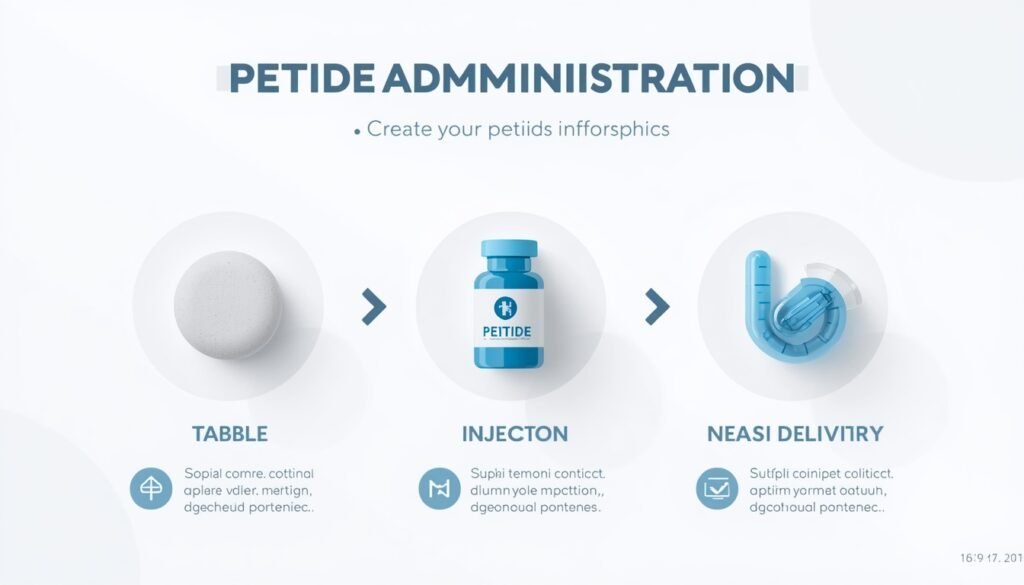
Several prescription medicines are peptide-based. Their formulations and approved routes can differ significantly. For example, some peptide therapeutics are designed for injection, while others have been developed for oral or alternative delivery.
That means there is no universal answer to “how to take peptides.” The correct method depends on the exact product.
How to Take Peptides Safely
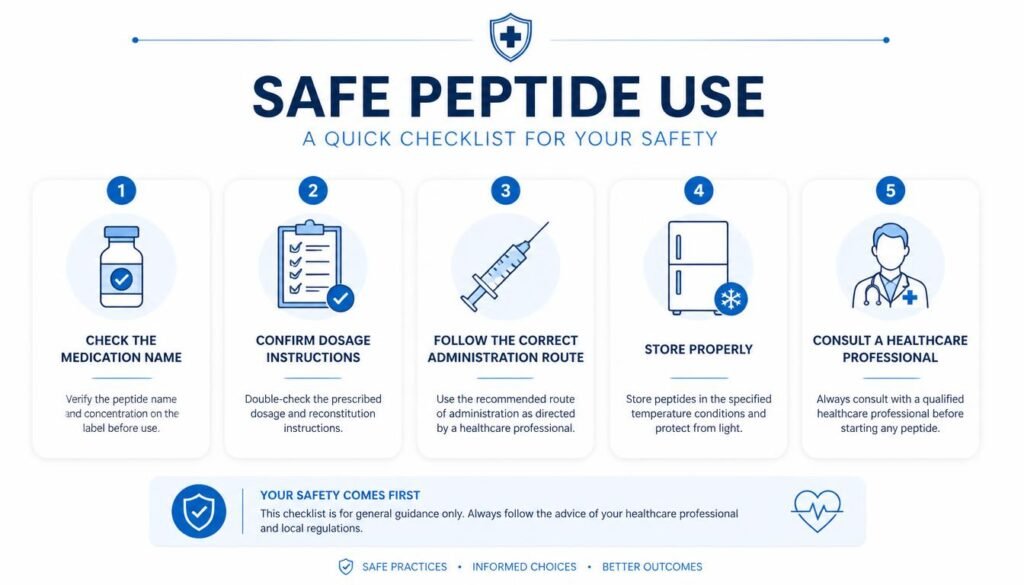
The safest way to take a peptide medicine is to use the exact route, dose, schedule, and preparation instructions supplied with your prescription or official product labeling.
For a prescribed peptide, use this basic process:
- Identify the exact medication. Check the product name, strength, and formulation.
- Read the pharmacy label and official instructions. Do not rely on instructions for another peptide.
- Confirm the route of administration. It may be oral, injectable, nasal, or another approved route depending on the product.
- Follow the prescribed schedule. Do not increase, decrease, or change the frequency without medical guidance.
- Use the supplied measuring device when applicable. Never guess a medicine amount from the appearance of a vial, syringe, or container.
- Ask a pharmacist or healthcare professional about anything unclear. This is particularly important when a product requires preparation before use.
The key point is simple: there is no standard peptide dosage or universal peptide administration method.
How Are Peptides Taken?
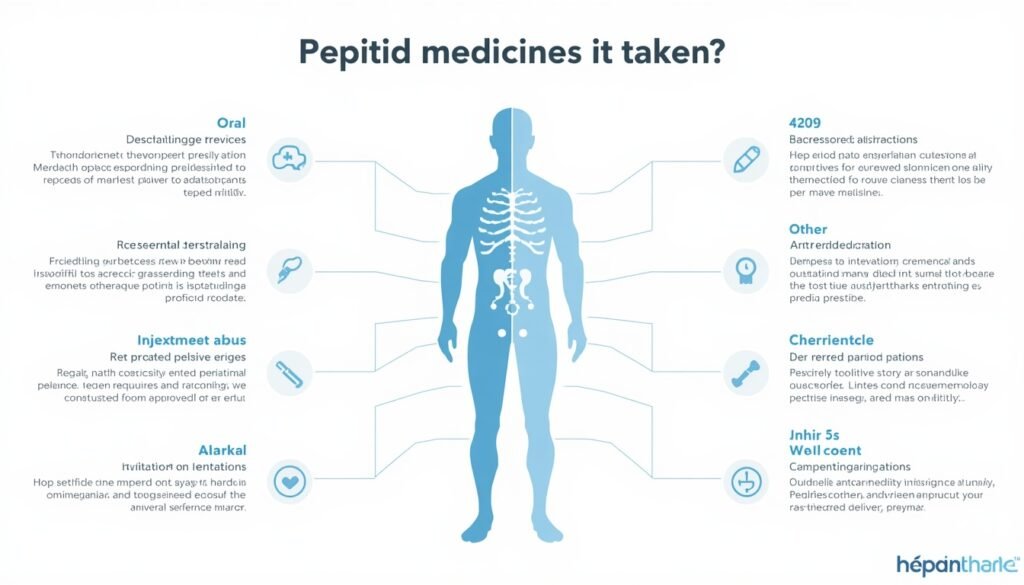
Peptide medicines can use different delivery methods. The formulation is designed around the characteristics of the particular medicine.
Injectable Peptides
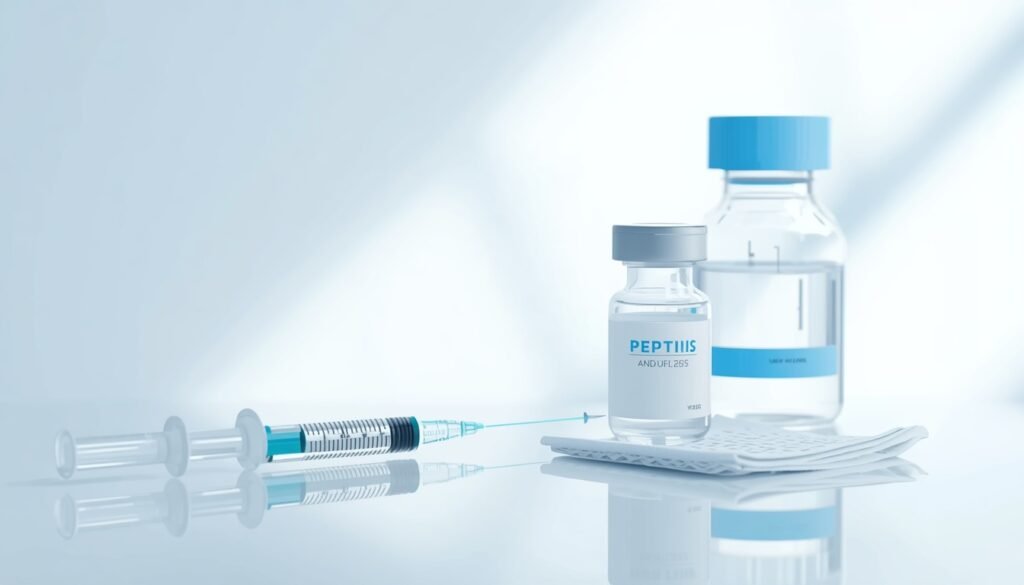
Some peptide medicines are administered by injection. Depending on the medicine, the approved route may include a particular type of injection rather than another.
Patients should not assume that an injectable peptide can be injected using any method or into any location. The product labeling should specify the approved route and instructions.
Injection products also require particular attention to cleanliness, storage, handling, and accurate dosing. FDA has warned that poor-quality injectable products can present serious risks, particularly when they are obtained from unapproved or poorly controlled sources.
Oral Peptides
Not every peptide medicine needs to be injected. Researchers and pharmaceutical manufacturers have developed oral formulations for some peptide therapeutics, although oral delivery can be challenging because peptides may be affected by digestion and absorption in the gastrointestinal tract.
If your prescription is an oral peptide, take it exactly as the product label instructs. Do not assume that crushing, splitting, mixing, or taking it with food is appropriate unless the instructions specifically allow it.
Other Routes
Certain peptide products have been developed for routes such as nasal administration and other delivery methods. However, a route that exists for one peptide does not automatically make it appropriate for another.
This is particularly important with unapproved products marketed online. FDA has identified safety concerns with certain compounded peptide substances for specific routes, including concerns related to impurities, aggregation, and immune reactions.
Why You Should Not Use a Generic Peptide Dosage
One of the most common mistakes is assuming that all peptides can be measured or dosed in the same way.
They cannot.
A peptide’s appropriate dose can depend on the specific medication, formulation, medical condition, patient characteristics, and prescribing instructions. Even products that appear similar may have different strengths or administration requirements.
For example, FDA has warned about dosing errors involving compounded injectable semaglutide products. Differences in how concentrations and strengths are expressed can create confusion and potentially lead to dosing mistakes.
Because of this, avoid converting a dose from one peptide to another or copying a dosing schedule from an online forum.
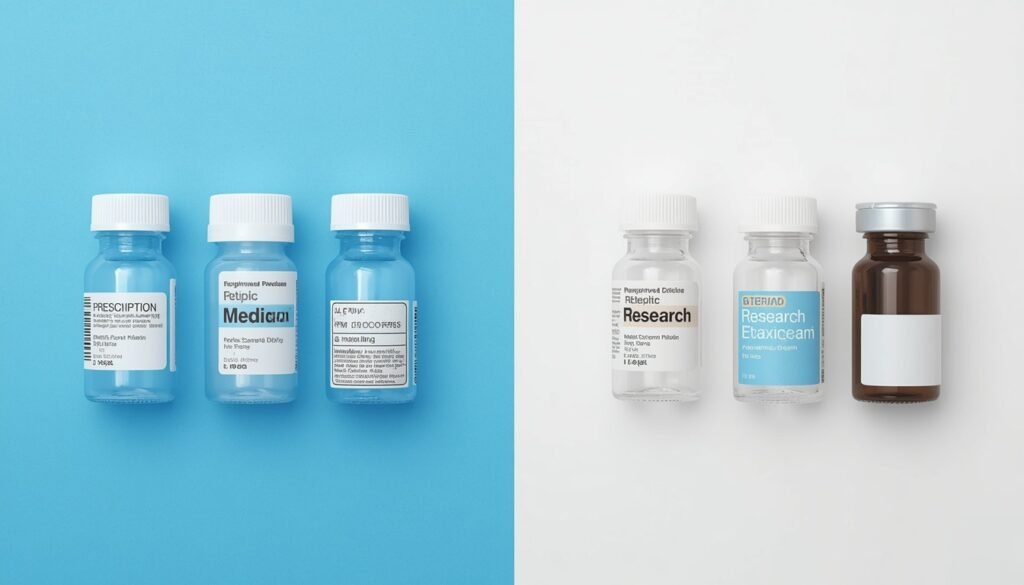
What About Peptides Sold as “Research Use Only”?
This is an important distinction.
Some websites sell substances described as “research peptides,” often accompanied by statements that they are not intended for human use. These products should not automatically be treated as medicines simply because they have a recognizable peptide name.
FDA states that unapproved drugs have not undergone the agency’s review of safety, effectiveness, quality, and labeling. Their manufacturing processes and contents may not provide the same assurances associated with approved medicines.
FDA has also specifically identified safety concerns involving several peptide substances promoted for compounding, including BPC-157, CJC-1295, ipamorelin, GHRP-2, and others. The agency has cited issues such as limited human safety information, peptide-related impurities, aggregation, and potential immune reactions for some substances and routes.
For that reason, you should not use online “research peptides” as substitutes for prescription medications.
Are Compounded Peptides the Same as FDA-Approved Peptides?
No. A compounded drug is not the same thing as an FDA-approved drug.
FDA explains that compounded drugs are not FDA-approved, meaning the agency does not review their safety, effectiveness, or quality before they are marketed. Compounding can sometimes meet a legitimate medical need, but it can also involve risks related to contamination, incorrect strength, or other quality problems.
If a healthcare professional prescribes a compounded medication, ask why it is being used instead of an FDA-approved product and make sure the pharmacy is properly licensed and reputable.
How to Store Peptide Medicines
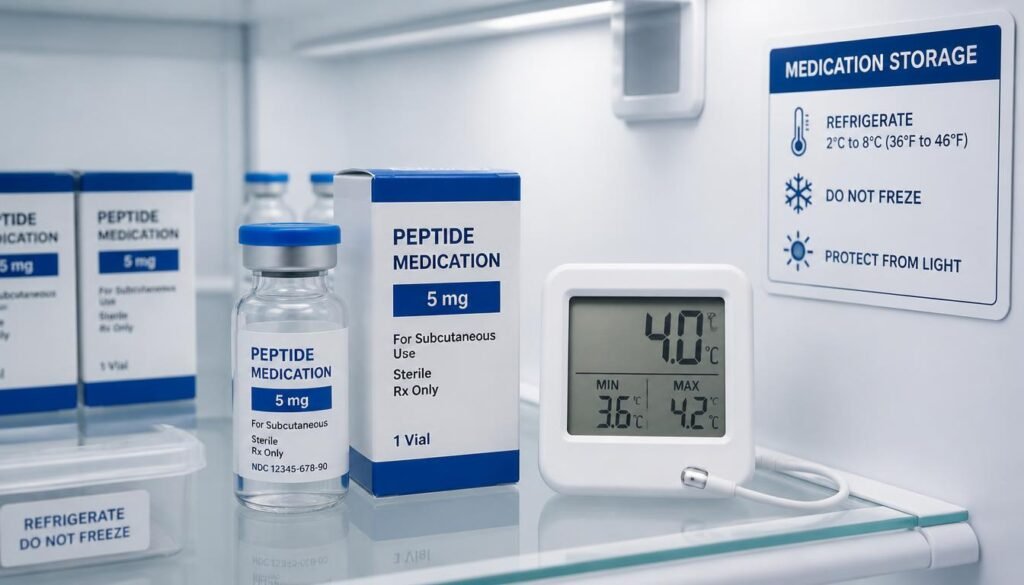
Storage requirements vary by product. Some medicines may require refrigeration, while others may have different storage conditions.
Always follow the storage instructions on the medication label or official prescribing information. Do not assume that all peptides should be refrigerated or that freezing is safe.
Pay attention to:
- The required temperature range
- Protection from light when specified
- Expiration or beyond-use dates
- Instructions for storage after opening or preparation
- Whether the product should be discarded after a certain period
Improper storage can affect medication quality.
What Should You Avoid When Taking Peptides?
Avoid making changes based on social media posts, online dosing calculators, or advice written for a different peptide.
In particular, do not:
- Use another person’s prescription.
- Change the dose without medical guidance.
- Mix medications unless the instructions specifically permit it.
- Substitute one peptide for another.
- Use a product labeled only for laboratory or research purposes in humans.
- Assume that a higher dose will produce better results.
- Follow injection instructions from an unrelated product.
- Buy prescription or injectable products from unknown online sellers.
FDA warns that unregulated or unapproved drug sources can expose consumers to products with unknown quality, labeling, manufacturing processes, or safety concerns.
What Should You Do If You Miss a Peptide Dose?
There is no single missed-dose rule for all peptide medicines.
The correct action depends on the exact medication and how long it has been since the scheduled dose. Check the medication’s official instructions or contact your pharmacist or healthcare professional rather than automatically taking extra medication.
Do not double a dose unless the prescribing instructions specifically tell you to do so.
What Are Common Side Effects of Peptide Medicines?
Side effects vary widely because different peptides act on different biological pathways.
Some peptide medicines can cause gastrointestinal symptoms, injection-site reactions, or other medication-specific adverse effects. However, it would be misleading to assign one universal list of side effects to all peptides.
Your medication guide should identify the known risks of the specific product you are taking.
Seek urgent medical attention for severe symptoms such as difficulty breathing, swelling of the face or throat, severe allergic reactions, loss of consciousness, or other symptoms that appear serious or rapidly worsening.
How to Choose a Safe Peptide Product
When a peptide has been prescribed, the safest option is to obtain it through a legitimate pharmacy or healthcare system.
Before using a peptide product, check:
Product identity: Make sure the name and strength match your prescription.
Source: Use a legitimate pharmacy or healthcare provider rather than an unknown seller.
Labeling: The product should have clear instructions appropriate for human use when it is a prescription medicine.
Storage: Confirm that it was stored and transported according to the product requirements.
Instructions: Make sure you understand the route, schedule, and preparation requirements before taking it.
FDA recommends consumers remain cautious when purchasing medicines online and research online pharmacies before using them.
Can You Take Peptides Without a Prescription?
That depends on the specific product and the laws where you live, but many peptide medicines are prescription drugs and should be used under appropriate medical supervision.
More importantly, a product being easy to purchase online does not prove that it is approved, safe, correctly labeled, or suitable for human use.
FDA notes that unapproved drugs can have unknown manufacturing processes, incomplete or inaccurate labeling, and limited evidence for effectiveness or safety.
Frequently Asked Questions About How to Take Peptides
How do you take peptides?
You take a peptide according to the specific medicine’s approved route and instructions. Depending on the product, administration may involve an injection, oral formulation, nasal route, or another delivery method. There is no universal way to take every peptide.
Are peptides taken orally or injected?
Both types exist. Some peptide medicines are formulated for oral use, while others require injection. The correct route depends on the individual medicine and its formulation.
Can you inject any peptide?
No. A peptide should not be injected simply because it is sold in a vial or described online as injectable. The product must be specifically formulated and authorized for the intended route, and unapproved injectable products can carry significant quality and safety risks.
Can I take a peptide without a doctor?
Do not assume that an online peptide product is safe for self-treatment. Prescription peptide medicines should be used according to professional medical advice, while unapproved research products may have unknown quality and safety profiles.
Are compounded peptides safe?
Compounded medicines can sometimes be appropriate for a specific medical need, but compounded drugs are not FDA-approved and are not reviewed by FDA for safety, effectiveness, and quality before marketing. Quality problems can include contamination or incorrect amounts of active ingredient.
Should peptides be refrigerated?
Not necessarily. Storage requirements depend on the specific medication. Follow the manufacturer’s or pharmacy’s storage instructions rather than assuming that all peptides require refrigeration.
What happens if I take too much of a peptide?
The effects of taking too much depend on the specific peptide and the amount involved. Do not take an additional dose to compensate for a missed dose unless your medication instructions specifically tell you to. If you think you have taken too much, contact a healthcare professional or poison-control service promptly for product-specific advice.
Are “research peptides” safe for human use?
A product labeled for research use is not automatically a medicine for human use. FDA warns that unapproved drugs may have unknown or inadequately evaluated safety, effectiveness, manufacturing, and labeling characteristics.
Conclusion
Knowing how to take peptides starts with identifying the exact peptide and its approved formulation. There is no universal peptide dose, route, or schedule that applies to every product.
For prescription peptide medicines, follow the medication label and your healthcare professional’s instructions. Be especially cautious with compounded or online products, and do not treat “research peptides” as interchangeable with approved medicines. FDA has identified quality and safety concerns with a number of unapproved and compounded products, making product source and accurate medical guidance essential.